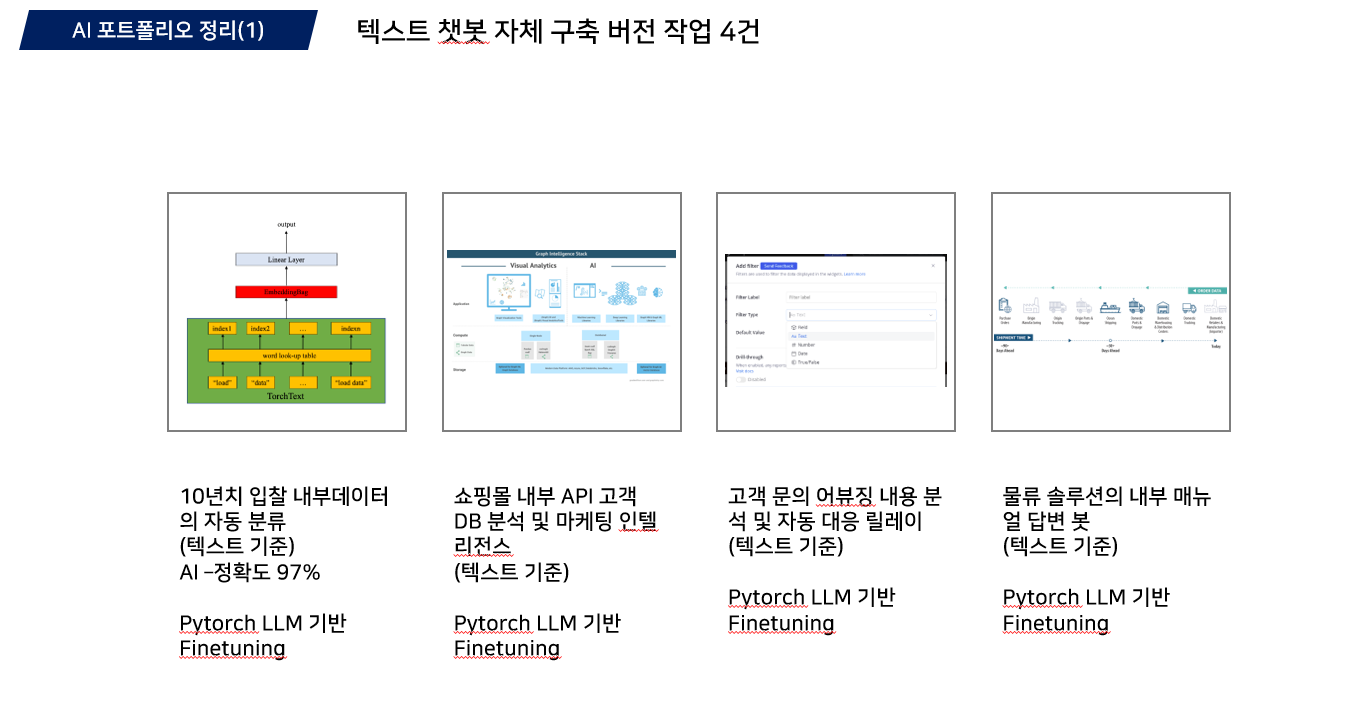
AI classification for a decade of tender documentsOriginal planning & project documents
IMPLEMENTATION SCOPE
From trained models to operational systems
Connect data, code and model versions in a reproducible training and evaluation path. Define release criteria, performance monitoring, model replacement and recovery.
What we build
Data pipelines · training/evaluation · serving · monitoring
What we validate
Reproducibility, data drift, batch/online differences, post-release performance and rollback
Details for technical reviewers. Architecture and acceptance criteria are agreed for the actual environment and project scope.
Data lineage
MLflow registry
Canary / Shadow
Feature drift
Processing flow and exceptions
Register trained artifacts with evaluation evidence and route approved versions to serving. Monitoring feeds reevaluation and retraining, with distinct paths for promoting a candidate and restoring a previous version.
ML ENGINEERING / MODEL LIFECYCLEDesign example · Refined against scope and constraints
ValidationKeep alerts separate from automatic promotion
Technology choices and acceptance criteria depend on discovery, integrations, and agreed scope. We define reproducible acceptance scenarios and handover evidence for the operating environment.
03Implementation details
Engineering decisions in detail
From visible features to failure conditions, we work through the decisions before launch.
01
Reproduce experiments as code, data, and environment
Link data snapshots, feature transformations, code commits, environment images, and hyperparameters through a run ID. Retain models and evaluation artifacts and validate schema, missingness, ranges, and distributions before training. Record library and hardware effects; a fixed random seed alone does not establish reproducibility.
02
Separate registration from release approval
Use a registry such as MLflow to associate versions with input signatures, examples, and evaluation evidence. Update operational aliases such as champion only after review. Release gates cover relevant data slices, latency, memory, and policy constraints; producing a model artifact must not automatically replace a production endpoint.
03
Combine serving contracts with progressive release
Align feature construction and input schemas across training, batch scoring, and online serving. Distinguish shadow evaluation from a canary that affects limited production traffic, with separate stop and rollback criteria. Specify compatibility between models and feature schemas, timeouts, and fallback behavior when a prediction is unavailable.
04
A drift alert is not an automatic retraining decision
Observe input drift, missingness, prediction shifts, and performance from delayed labels separately. Retraining requires sufficient data, cost controls, evaluation, and approval; a worse candidate can be recorded without promotion. Use lineage and run history to investigate whether data, features, code, or deployment caused a regression.
04Handover
Detailed deliverables
Training and evaluation pipelines with experiment and model history
Batch or online serving and release and recovery configuration
Evaluation reports, monitoring, and retraining and approval procedures
05Before implementation
Questions before implementation
Problem definition, labels, data history, and existing models
Real-time needs, throughput, and the cost of errors
Reviewers and ownership of ongoing model operations
How your project moves forward
01
Discover
Understand your goals, workflows, and operating environment.
02
Define
Define features, priorities, and integration requirements.
03
Build
Build the agreed scope and review progress together.
04
Launch & Operate
Prepare testing, deployment, and operational handover.
Let’s discuss your project
Tell us what you want to build or improve Our team will review your request and reply by email

 Original planning & project documents